Call for Participation
for the 40th International A+A Congress 2027:
Prevention Ensures Stability – Occupational Safety as the Key to Corporate Resilience in Turbulent Times
The 40th International Congress on Occupational Safety and Health in 2027 thrives on the diversity of perspectives and the experiences of its participants. At the same time, all presentations share a common goal: exploring how prevention can help make companies, organizations, and employees resilient, capable of taking action, and prepared for the future.
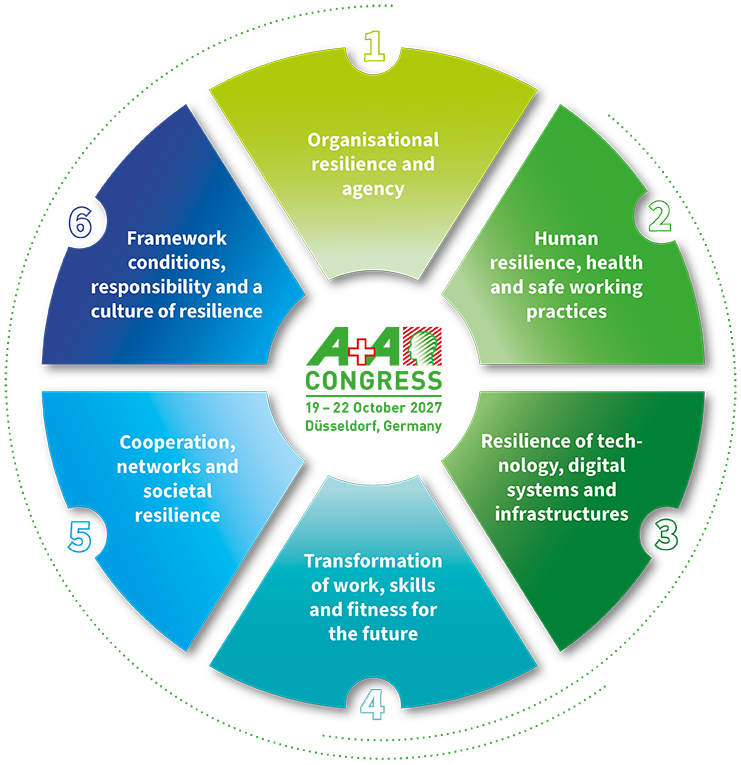
To highlight this focus in the conference program, the Call for Participation is organized around six thematic clusters. These clusters address the key challenges of our time—ranging from organizational and human resilience to digital and technical security, as well as changes in the world of work, collaboration, and the necessary legal and cultural frameworks.
For your submission, please select the topic cluster that is most closely related to your contribution. Whether it’s a case study, research findings, a project presentation, a workshop, or an innovative dialogue format: What matters most is that your proposal makes a clear contribution to the conference’s central theme and provides new impetus for a resilient workplace.

Theme Clusters—The Framework for Your Submission:
The following thematic clusters serve as the content framework for the 2027 conference program.
Key Question: How can organizations, businesses, and educational institutions remain functional, capable of making decisions, and productive even during crises?
- Safety and Health Culture
- Resilient Work Organization and Process Design
- Risk and Crisis Management
- Leadership / in Crises
- Communication and Crisis Communication
- Securing Resources (Financial / Personnel)
- Change and Crisis Management
- First Aid, Emergency Care, and Evacuation
Key question: How do we protect life, health, and the ability to work and remain employed under exceptional stress conditions?
- Psychische Belastung, Sicherheit und Gesundheit
- Physische Gesundheit in der Arbeitswelt
- Stress, Stress Management, Resilience
- Erschöpfung, Traumatisierung
- Dealing with Uncertainty, Fear, and Change
- Working Under Improvised Conditions
- Protection of Employees in High-Stress Groups
- Situations Involving Violence, Terrorism, Rampages, and Threats
Key Question: How can technical, digital, and infrastructural systems remain secure, available, and recoverable?
- Workplace Safety
- Biological, Chemical, and Physical Hazards
- Maintaining and safeguarding critical functions and infrastructure
- Emergency and Incident Management
- IT and Information Security
- Cybersecurity
- Dealing with Disinformation and Hybrid Threats
- Supply Chains and Supply Chain Diversification
Key Question: How is work changing as a result of crises, digitalization, climate change, and demographic shifts—and how can it be organized in a way that ensures safety and health?
- AI and Digitalization
- Climate Change, Heat, Extreme Weather, and Sustainability
- New Ways of Working and Hybrid Work Models
- Employee Training and Skills
- Demographic Change
- Securing a Skilled Workforce
Key Question: How can resilience be achieved through collaboration across organizational boundaries?
- Cooperation with Government Agencies
- Disaster Management, Fire Department, Emergency Medical Services
- Health Care and Rehabilitation Providers
- Regional Networks and Crisis Partnerships
- Consultation with Social Partners
- Cooperation Between Businesses, Educational Institutions, and Workers’ Compensation Insurance
- Joint exercises and situation reports
- Interface Management During Crises
- Communication with External Stakeholders
Key question: What legal, ethical, and cultural conditions are necessary for resilient action?
- Laws, Regulations, Rules, and Contracts
- Ethical Standards and Prioritization in Crises
- Allocation of Responsibility Among the Government, Businesses, Workers’ Compensation Insurers, and Other Stakeholders
- Responsibility for Action, Leadership, Personal Responsibility, and Organizational Responsibility
- Compliance and Governance
Remarks by Bärbel Bas, Federal Minister of Labor and Social Affairs
Dear Colleagues,
Amid all the discussions about reforms and our welfare state, we sometimes lose sight of just how crucial occupational safety is for companies and employees today. The theme for the 40th International A+A Congress in 2027 could not be more timely: “Prevention Ensures Stability—Occupational Safety as the Key to Corporate Resilience in Turbulent Times.”
Against the backdrop of international crises and tensions, climate change, and the challenges of an increasingly digitized workplace, occupational safety and health is not just about preventing illness and workplace accidents. It is also about creating the conditions—through effective prevention—that allow people to work for a long time and in good health. After all, when people are healthy and stay that way, they can work more productively, reliably, and with greater satisfaction. In this way, occupational safety and prevention not only benefit employees themselves, but also businesses and, consequently, society as a whole.
To ensure that occupational safety remains up to date, it is extremely important to engage in regular dialogue. What opportunities and risks does AI present for businesses? How do we prepare for extreme weather conditions? And what do we do if critical infrastructure fails?

In 2027, the International A+A Congress will celebrate its 40th edition. Held in conjunction with the leading International A+A trade fair, the congress brings together executives and experts from the fields of politics, academia, business, public administration, and industry in Düsseldorf. Through the Call for Participation, experts are invited to submit their experiences, projects, research findings, and ideas and to actively help shape the anniversary program.
Susanne Liebe,
, President of the Association of German Company and Plant Physicians (Verband Deutscher Betriebs- und Werksärzte e. V.)
Crises do not affect companies in the abstract—they affect people, work processes, and established structures. Prevention creates the conditions necessary for employees to remain healthy and able to work, and for organizations to remain capable of functioning even under stress. Those who focus solely on establishing emergency plans, technology, procedures, and responsibilities—but treat employees as a resource that is always available—are falling short. Occupational medicine brings the necessary employee perspective to the table: occupational physicians are familiar with job duties, stressors, and health requirements. They help shape protection and response strategies and therefore belong in workplace emergency planning and crisis management teams. In this way, prevention becomes a strategic investment in resilience, stability, and sustainability.
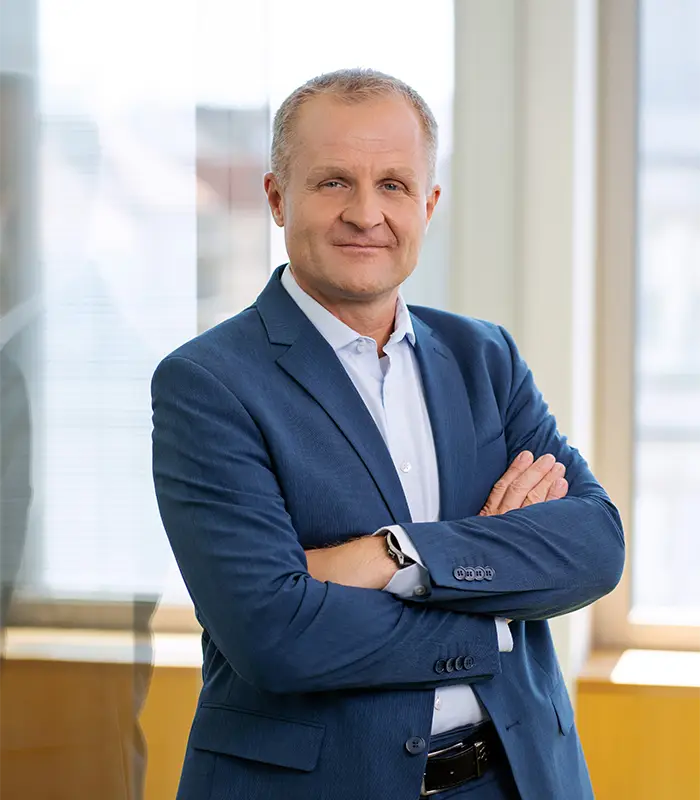
Dr. Stephan Fasshauer, Chief Executive Officer of the DGUV:
Prevention is always successful when nothing happens. Its importance is therefore often overlooked
. The effectiveness of prevention practiced every day becomes particularly evident during a crisis,
when one can—and must—rely on existing networks.
Awareness of the importance of prevention is greater than commonly assumed.
This is shown by the DGUV Barometer on the World of Work 2026, a representative survey of
workers on the state of safety and health in the workplace. According to the survey
, 90 percent of respondents agreed with the statement that prevention strengthens companies
and increases Germany’s resilience as a business location. Among the general public,
prevention is recognized as a factor contributing to stability.
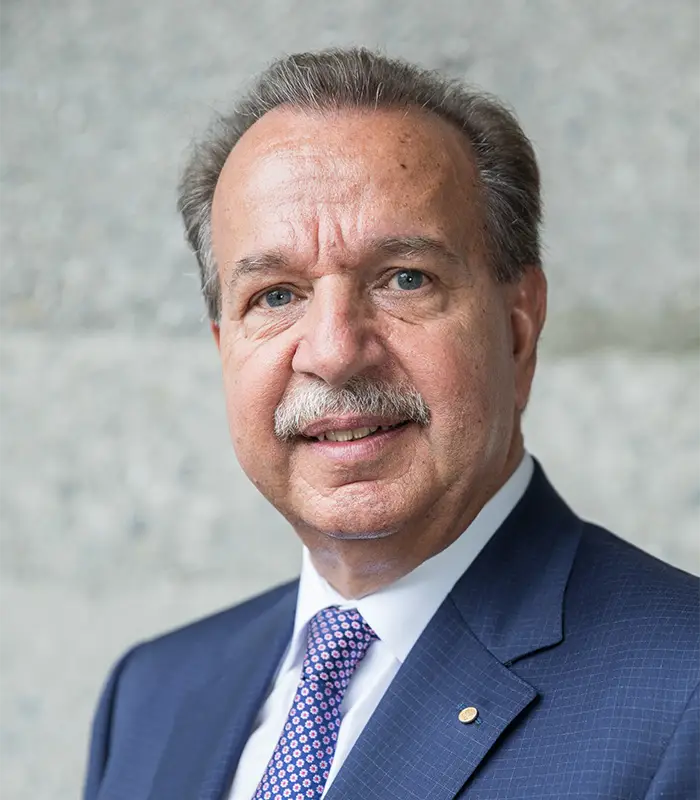
Hans-Horst Konkolewsky,
President of the International ORP Foundation:
Today, prevention is much more than just avoiding accidents—it is a key factor in competitiveness and resilience.
Companies that strategically integrate safety, health, and well-being into their leadership culture and use digital innovations responsibly are more resilient in the face of crises, more productive, and more attractive to their employees.
The future belongs to forward-looking, people-centered prevention that builds trust, fosters innovation, and ensures sustainable stability for businesses and society.

Dr. Sebastian Schneider,
, President of Basi e.V.
All stakeholders in a company benefit from a well-organized occupational safety and health program. Prevention involves more than just avoiding obvious hazards in everyday work. Designing work in a way that respects human needs not only helps employees stay healthy—it also strengthens their sense of self-efficacy and promotes the democratization of work. Employee participation in business processes enables companies to manage unexpected events, adapt to changing conditions, and maintain operational stability. Proactive occupational safety and a well-established culture of prevention thus strengthen not only the safety and health of employees but also a company’s resilience.
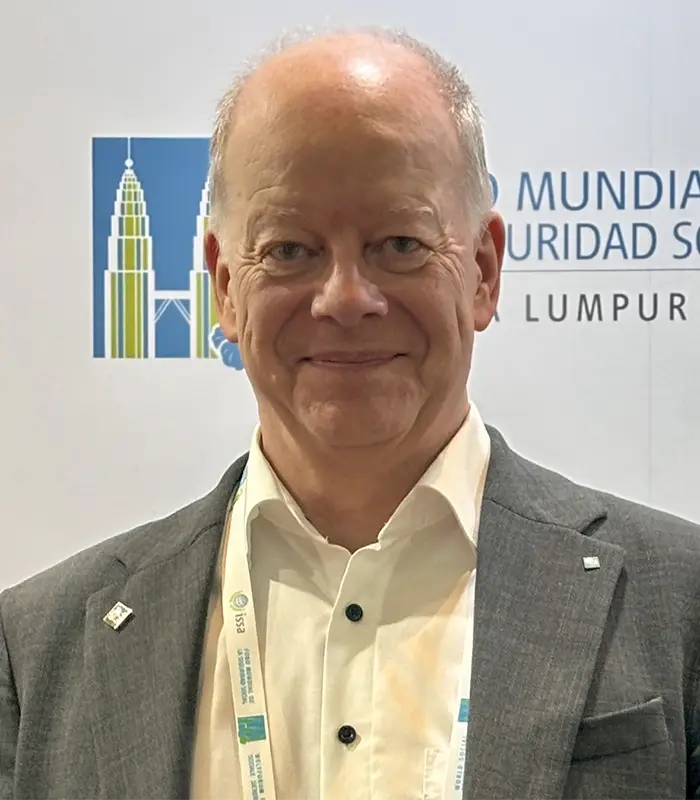
Dr.-Ing. Jens Jühling,
, Chairman of the Special Commission on Prevention (ISSA)
Prevention is the cornerstone of stability and resilience. Companies that proactively safeguard the health, safety, and well-being of their employees are better equipped to face economic uncertainties, adapt to change, and even overcome crises. Prevention strengthens trust in the company, ensures productivity, and promotes sustainable business success. The “Vision Zero” strategy provides the framework for achieving this by integrating safety, health, and well-being into every aspect of work. Ultimately, the theme of the 40th A+A International Congress can only be fully and sustainably implemented through a firm commitment to “Vision Zero.”
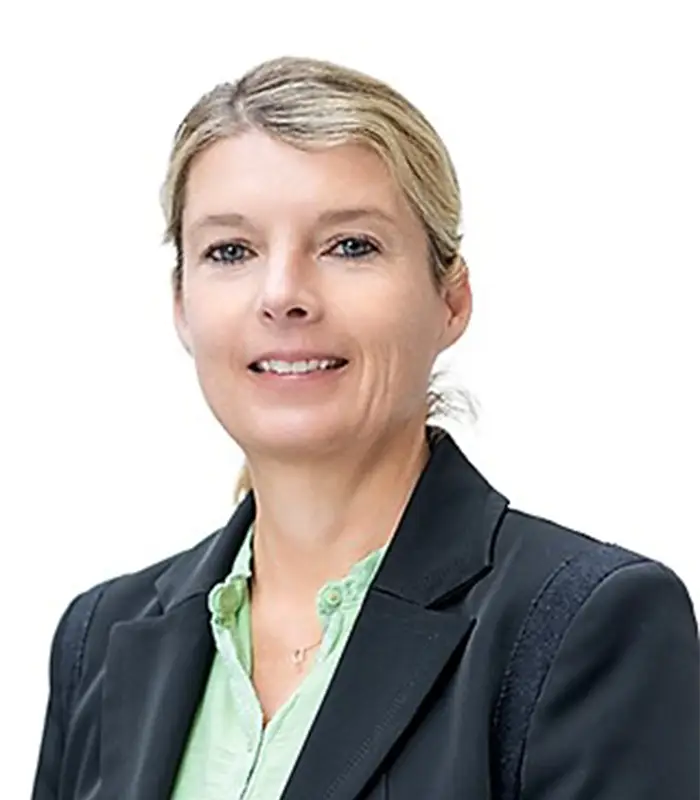
Saskia Osing,
, alternating chair of Basi e. V.:
Prevention and effective occupational safety and health measures play a key role in ensuring safe and healthy workplaces. They help prevent workplace accidents, occupational diseases, and work-related health hazards; reduce absenteeism; and maintain employability in the long term. Particularly in light of demographic change and the shortage of skilled workers, practical and proportionate occupational safety and health measures are of great importance. However, reliable economic conditions, innovation, a skilled workforce, and business flexibility are equally crucial for companies’ resilience and competitiveness.
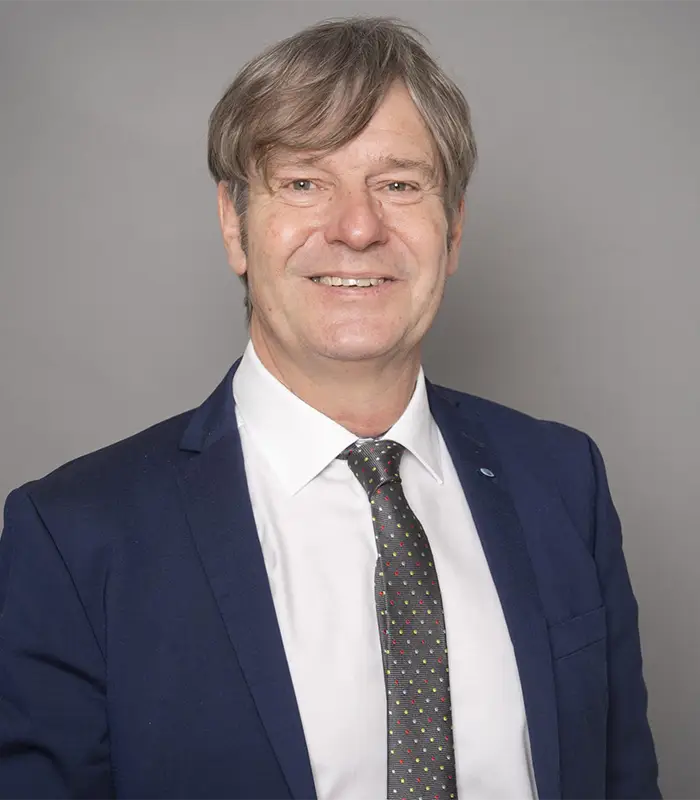
Dr. Christian Felten,
, Executive Director of Basi e. V.
Simply reacting is not enough when companies face ever-changing challenges during crises or periods of transformation. Ensuring safety and health for everyone at work lays the foundation for employees to remain motivated and productive, and for companies to remain capable of taking action even under difficult conditions. Effective prevention not only prevents accidents and absences; it also strengthens collaboration, fosters trust, and makes organizations more resilient. Occupational safety and healthy working conditions pay off in every respect.
What approaches—whether on a global scale or on a smaller level—help companies strengthen their employees’ health and resilience? How can we measure the success of these measures? Actively shape the program of our 40th A+A Congress with your contributions and share your knowledge within a large network. We look forward to your ideas for a better working world.
This helps maintain the overall look and makes it easier to compare fonts. Of course, it’s advantageous if the dummy text appears reasonably realistic so that the layout’s impact on the final publication isn’t compromised.
Session and/or presentation
Event Formats
Barcamp
Panel Discussion
Fishbowl
Interview
Networking Event
Open Space
Pecha Kucha
Podcast
Panel Discussion
Poster
Symposium
Trial and Error
Lecture
Lecture Series
Workshop
World-Café
Future Workshop
Getting Started
Yes. You can only access the CfP submission form if you register in the conference software and create an account. With this account, you can manage your profile and edit your CfP submission until the CfP deadline. If you already have an account from previous A+A conferences, please use that one.
Yes. To update your profile, log in using your existing credentials on the A+A Congress website??.
Anyone involved in occupational safety and health can submit ideas and participate in the Call for Papers.
If you have previously served as a speaker or moderator at the A+A Congress, please use your existing profile. Log in with your previous login information (username, password) and update your profile if necessary.
Forgot your password? No problem. You can reset it by clicking the “Forgot your password?” link at the bottom of the login page. To be on the safe side, be sure to check your spam folder as well.
Setting up an account takes just a few minutes. To complete your profile, we recommend that you have the requested information on hand for the required fields, which are marked with an asterisk (*).
Please follow these steps:
- On the submission tool’s home page , click the blue “Submit Paper/Session” button on the left . In the next window, select “Create New Account” at the bottom.
- Under “Personal Information,” enter your username and set a password.
- Next, please fill in the following required information:
• Email address
• Title
• First name
• Last name
• Institution/Company
• Street and house number
• ZIP code and city
• Country - We need your email address so we can send you important information. Of course, it will not be published.
- Please also provide a valid landline or cell phone number where we can reach you in case of an emergency.
- You can optionally add your LinkedIn profile.
- Finally, we ask that you agree to the terms and conditions regarding the creation and use of photos and videos, as well as the privacy policy.
- Finally, click “Create Account” to save your information.
Dates & Terms and Conditions
The Call for Papers (CfP) begins on September 1 and ends on October 15, 2026, at midnight (11:59 p.m. CET). All submissions will be discussed, evaluated, and prioritized by an independent panel of experts in early December. In April 2027, we will inform you of the status of your submission.
You may submit multiple proposals. Please note, however, that the quality of the submissions is more important than their quantity. Therefore, focus on a few, carefully crafted contributions that offer clear added value.
Submissions may also be made on behalf of third parties. Please note that all feedback on submitted proposals will be sent exclusively to the person who submitted them—not to the person who commissioned them.
No. Not all participants need to be confirmed at the time an event is submitted. However, in the event description, you should already indicate which organizations or companies are expected to be involved. These should also be informed in advance about their planned participation.
After your event has been officially approved, all participants, including their contact information, must be listed. The organizer will then officially invite the participants.
If you are organizing an event, it is your responsibility to ensure that all participants review and, if necessary, complete their profile information and confirm their participation.
If you submit a session with multiple contributors, you will serve as the contact person and be responsible for organizational coordination.
Your responsibilities will include, in particular:
- You are the main point of contact for the organizing team and will answer any questions about your session.
- You plan the session’s agenda and submit the relevant information via the submission tool.
- You will participate in the session as a speaker or moderator.
- You create profiles for all contributors in the submission tool or submit their contact information.
- Add all the contributors to your session in the submission tool.
- They ensure that all relevant information from the organizing team is passed on to the participants.
Even if you are submitting a proposal on behalf of someone else, you will first need to create your own account.
After logging in, select whether you would like to “Submit a New Proposal” or “Submit a New Session.” Next, indicate whether you are the author or are submitting the proposal on behalf of someone else.
If you select “No, I am submitting on behalf of someone else,” you will be prompted in the next step to enter the author’s information.
Please note that all feedback regarding a submitted proposal will be sent exclusively to the person submitting it—not to the author.
You may submit your proposal in German or English.
Please write your submission in the language in which you will later deliver your presentation or lead your session. This will allow the expert panel to evaluate your contribution appropriately and accurately incorporate it into the program information.
No. Submissions received after the deadline cannot, as a general rule, be considered.
However, in justified exceptional cases, the program team may, at its discretion, review late submissions or specifically request contributions if they meaningfully complement the conference program.
All submitted papers will be reviewed, evaluated, and prioritized by an independent panel of experts in early December.
In April 2027, we will notify you via email regarding the status of your submission. We ask for your patience until then: Due to the large number of submissions, the careful review process and the compilation of a balanced conference program will take some time.
Yes. All speakers and moderators at a conference event receive a free conference ticket for the day or days they are participating.
If you are actively involved in the conference program on multiple days, you will receive a free conference ticket for each day you are participating.
No. Travel and lodging expenses are generally not covered by Basi.
If, in exceptional circumstances, your organization is unable to cover the costs, please feel free to contact us. In justified individual cases, we will work with you to determine whether a solution is possible.
Yes. Please note that the acceptance of your submission, as well as a role as a presenter or chair of a session, does not automatically constitute registration for the conference.
All participants in the A+A Conference will be invited centrally and must confirm their attendance via the conference portal.
Once you have successfully confirmed your participation, you will receive a code for a free conference ticket for the day on which you are actively participating in the program. You will only be granted access to the conference area and be able to participate in the conference with a valid conference ticket.
The call for participation closes early to allow sufficient time for the careful selection and planning of the conference program. This enables the submitted contributions to be grouped by topic, coordinated with the speakers, and compiled into a well-balanced overall program. At the same time, early program planning allows conference attendees to better navigate the schedule and prepare for the event.
We also ensure that current developments are not overlooked: We reserve program slots until shortly before the conference for particularly relevant political issues, new trends, or last-minute developments. This allows important and timely content to be included in the conference program even at the last minute.
The Most Important Points at a Glance
Once you have successfully registered, you will be guided step by step through the submission process. During this process, you will enter or select the required information.
This includes, in particular:
- Title of Your Post
- Submission Format
- Relevant topic area
- Abstract (Brief Description)
- If applicable, authors and their contact information (e.g., if the submitter is not the author or if there are multiple authors)
A presentation is a single program item on a specific topic. Presentations can be submitted in various formats, such as a lecture, panel discussion, fishbowl, Pecha Kucha, or another interactive format.
A session consists of several thematically related presentations and constitutes a complete event format. When you submit a session, you are proposing an overall concept that includes the topic, agenda, and participating speakers.
The Finishing Touch
You can choose from a variety of formats for your submission:
- Barcamp
- Panel Discussion
- Fishbowl
- Interview
- Networking Event
- Open Space
- Pecha Kucha
- (Live)-Podcast
- Panel Discussion
- Poster
- Symposium
- Trial & Error
- Presentation/Speech
- Lecture Series
- Workshop
- World-Cafe
- Future Workshop
The A+A Congress will be held as an in-person event. Online presentations are not planned.
An accepted paper may only be presented online in exceptional cases. Please note that the necessary technical and organizational requirements must be met for this. You will then receive detailed information regarding the presentation process and available formats from the organizing team in a timely manner.
A strong submission stands out for its relevance, timeliness, and a clear connection to specific challenges in the field of safe and healthy work. We are particularly interested in submissions that not only inform but also open up new perspectives, highlight potential solutions, and inspire further reflection.
It is important to have a well-thought-out concept that is technically sound and offers clear added value for participants—for example, through practical examples, new insights, or a clear stance on a topic.
The format is equally crucial: Preference is given to interactive formats that actively engage conference attendees—such as through discussions, participatory elements, or collaborative content development. This fosters exchange and ensures that the content presented is remembered more effectively over the long term.
Yes. Your submission should relate to the main theme of the A+A Congress:
“Prevention Ensures Stability—Occupational Safety as the Key to Corporate Crisis Resilience in Turbulent Times.”
In your submission, explain how your contribution fits the main theme or addresses a relevant aspect of it. This will make it easier to categorize your contribution and highlight its relevance to the conference program.
- Title: maximum 180 characters. Make the title as concise and descriptive as possible. Please note that long titles may be automatically shortened in the program guide.
- Description: Maximum 1,500 characters. Describe the content of your submission as briefly, clearly, and concisely as possible.
The A+A Congress offers a diverse program—so your title should capture visitors’ attention while clearly conveying the content of your presentation.
Make your title as concise, understandable, and meaningful as possible. A specific title makes it clearer right away what your presentation is about and increases the likelihood that interested attendees will choose your presentation.
For example,“All You Need Is Love: Social Media Strategies Against Online Hate” is more meaningful than“Why All You Need Is Love.”
A precise description of the topic is also helpful: “How Surgeons Practice Difficult Surgeries in Virtual Reality” conveys the content much more clearly than “Virtual Reality as a Training Tool.”
Attendees of the A+A Congress can expect technically sound presentations on current challenges and solutions related to safe and healthy work. Unfortunately, presentations that are purely promotional, product-focused, or marketing-oriented cannot be considered.
However, this does not mean that there is no interest in innovative products or services. If you would like to present your innovation to the trade audience, please feel free to contact our colleagues at Messe Düsseldorf. They will provide you with information on the options for participating in the accompanying trade show.
In conclusion
If you couldn’t find the answer you’re looking for in the FAQs, we’d be happy to help. Just email us at congress@basi.de.
Your TPSG contacts at the A+A trade show:
Your contact person for the A+A Congress Marketplace
An attractive location for your booth: The Safety & Health Meeting Place (TPSG)
at the A+A trade show and in the marketplace of the International A+A Congress
At the “Safety and Health Meeting Place” (TPSG) as part of the A+A trade fair, as well as at the marketplace during the A+A Congress, numerous organizations, networks, and international institutions—such as the European Agency for Safety and Health at Work (EU-OSHA), the International Social Security Association (ISSA) and the International Labour Organization (ILO) will present their advisory and support services.
These platforms combine the trade show and conference, offering trade show and conference attendees the opportunity to ask questions about occupational safety and health directly at the exhibitors’ booths. Lecture programs on stage and trend forums at the trade show provide additional highlights.